Welcome to our company
 Send Email
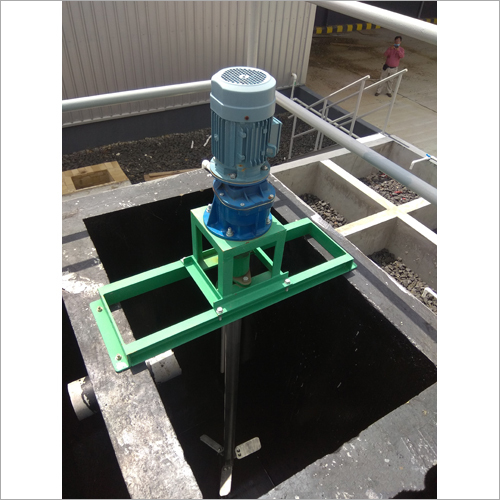
Industrial Wastewater Aerator
10000 INR/Bag
Product Details:
- Water in conductivity <4000 S/cm
- Feature Corrosion Resistant, High Oxygen Transfer Efficiency
- Flow Rate Adjustable
- Efficiency (%) >90%
- Power Consumption 3-7.5 kW
- Technology Diffused Aeration
- Ph Level 6.5 - 8.5
- Click to view more
X
Industrial Wastewater Aerator Price And Quantity
- 1 Plant
- 10000 INR/Bag
Industrial Wastewater Aerator Product Specifications
- Adjustable
- >90%
- Standard/Customizable
- Industrial Wastewater
- Surface Mount/Float Type
- Diffused Aeration
- 3-7.5 kW
- <4000 S/cm
- Aeration only
- Direct Drive
- Corrosion Resistant, High Oxygen Transfer Efficiency
- Automatic
- 380V
- 1-50 m3/h
- Submersible/Surface
- Up to 99%
- 6.5 - 8.5
- 95%
- <80 dB
- 50/60 Hz
- Electric
- SS304/SS316
- Effluent Treatment Plants, Chemical Industries, Food Processing, Sewage
- Wastewater Aerator
- <10 S/cm
- IP55 motor protection
- Customizable per site requirements
- 0C to 50C
- Textile, Chemical, Food & Beverage, Pharmaceuticals, Paper & Pulp, Municipal
- 950 - 1450 RPM
- Floating or fixed mount optional
- Corrosion-resistant alloy
- 1.5 to 3.2 kg O2/kWh
- Mechanically driven surface aeration or submersible diffusion
- Digital/PLC control panel available
Industrial Wastewater Aerator Trade Information
- 1 Plant Per Day
- 1 Days
Product Description
With the assistance of our advanced methods and imaginative innovation, we are fit for producing and providing of top-quality Industrial Wastewater Aerator to our buyers. This item is mainly utilized in the industrial water for lessening ammonia, controlling bacteria and eliminating carbon dioxide. It is produced by using great quality required materials with the help of innovative technology. Our clients can benefit this Industrial Wastewater Aerator at a market-driving price rate within the promised time frame.
Advanced Oxygen Transfer and Efficiency
With an oxygen transfer rate of up to 3.2 kg O2/kWh and an overall efficiency exceeding 90%, this aerator ensures effective water purification. Its corrosion-resistant impeller and direct drive system provide long-lasting, low-maintenance performance, while digital/PLC control facilitates precise operation in demanding industrial settings.
Versatile Applications and Custom Options
Utilized in effluent treatment plants, chemical manufacturing, pharmaceuticals, food and beverage processing, and municipal wastewater management, the aerator is adaptable to a wide array of site conditions. Customizable dimensions, mounting options, and flow rates make it suitable for both new installations and retrofits. The system meets stringent water quality requirements with output conductivity under 10 S/cm.
Robust Construction and Safety
Made from high-grade stainless steel (SS304/SS316), the aerator withstands aggressive industrial environments. IP55 motor protection ensures reliable performance even in harsh conditions. Automatic operation through digital/PLC control enhances safety and minimizes manual intervention, optimizing staff productivity and system uptime.
FAQs of Industrial Wastewater Aerator:
Q: How does the industrial wastewater aerator improve water quality in effluent treatment plants?
A: The aerator enhances water quality by efficiently dissolving oxygen into wastewater, promoting aerobic microbial activity that decomposes organic contaminants. Its high oxygen transfer rate and advanced diffusion technology support effective and rapid purification, resulting in treated water that meets or exceeds regulatory standards.Q: What industries can benefit from this aeration system and why?
A: Industries such as textiles, chemicals, pharmaceuticals, food and beverage, and municipal sewage plants benefit from this aerator due to its robust corrosion resistance, high efficiency, and ability to handle varying wastewater compositions. Its adaptable configuration makes it suitable for diverse industrial water treatment processes.Q: When should a floating mount be chosen over a fixed mount?
A: A floating mount is ideal for installations where water levels vary or where easy repositioning is required, such as in lagoons or large tanks. Fixed mounts are preferable for stable water bodies or permanent setups. Both options offer optimal performance based on site-specific needs.Q: What is the process for installing and customizing the aerator for a specific site?
A: Upon site assessment, engineers determine the required capacity, mounting type, and dimensional specifications. The aerator is then customizedincluding volume, mounting, and control panel preferencesand installed by trained professionals, ensuring seamless integration with existing treatment infrastructure.Q: How does the control panel enhance the operation of the aerator?
A: Equipped with digital or PLC-based controls, the panel enables automated and precise management of aeration parameters such as flow rate, operational timing, and performance monitoring. This automation reduces manual oversight, optimizes efficiency, and ensures consistent compliance with water quality standards.Q: Where is this aerator manufactured and supplied?
A: This aerator is designed, manufactured, and exported from India, catering to both domestic and international clients through a network of reliable suppliers and exporters. Custom solutions are offered to suit varied global regulatory and operational requirements.Q: What are the main benefits of using this aerator in industrial settings?
A: Key benefits include high oxygen transfer efficiency, corrosion resistance, low power consumption, customizable installation options, and automated operation. These features collectively contribute to improved treatment outcomes, reduced operational costs, and enhanced equipment longevity.Tell us about your requirement

Price:
Quantity
Select Unit
- 50
- 100
- 200
- 250
- 500
- 1000+
Additional detail
Mobile number
Email

Other Products in 'Floating Aerator' category


Contact Details

- Shop No. - 4, Chaitanya Apartment, Opp, Van Vasant Colony Gate, Parvati, Pune - 411009, Maharashtra, India
- Phone : 08045811808
ANUJ ENTERPRISES
GST : 27AJPPP5011Q1ZK

- Mr DHANANJAY PADMAKAR DESHPANDE (PARTNER)
- Mobile : 08045811808
- Send Inquiry
 Send Inquiry
 Send Inquiry
 Send SMS
ANUJ ENTERPRISES
All Rights Reserved.(Terms of Use)
Developed and Managed by Infocom Network Private Limited.
Developed and Managed by Infocom Network Private Limited.


