Welcome to our company
 Send Email
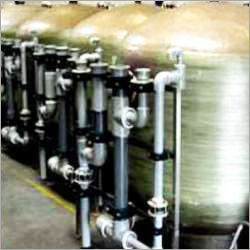
Demineralisation Water Treatment Plant
10000 INR/Bag
Product Details:
- Recycle Rate Up to 96%
- Pump Type Centrifugal Pump
- Technology Ion Exchange
- Flow Rate 5 m3/hr to 30 m3/hr
- Efficiency (%) 9899%
- Frequency 50/60 Hz
- Noise Level Low (<70 dB)
- Click to view more
X
Demineralisation Water Treatment Plant Price And Quantity
- 1 Plant
- 10000 INR/Bag
Demineralisation Water Treatment Plant Product Specifications
- > 99.5%
- Electric
- 220240 V
- < 1 S/cm
- < 500 S/cm
- Demineralisation Water Treatment Plant
- Pharmaceutical, Boiler Feed, Process Water, Laboratories, Electronics
- 6.57.5
- Low (<70 dB)
- 50/60 Hz
- Electric Motor
- 250 LPH 50000 LPH
- Multi Grade and Carbon Filter
- 210 kW depending on capacity
- 9899%
- Up to 96%
- Floor Mounted
- Centrifugal Pump
- Automatic
- Ion Exchange
- 5 m3/hr to 30 m3/hr
- Borewell, River, Municipal Supply
- Mild Steel with FRP Lining
- Variable as per capacity
Demineralisation Water Treatment Plant Trade Information
- 1 Plant Per Day
- 1 Days
Product Description
Demineralisation Water Treatment Plant
Our demineralization plant performs efficiently in purifying and removing varieties of impurities from water. The plant clean the polluted and infected water by killing the injurious microorganisms and bacteria.We offer sand filters which are available in manual as well as automatic configurations. For demineralization or deionization process raw water is allowed to pass through the cation resin bed that contains sac resin which is available in h+ form and it removes calcium, magnesium and sodium converting it to their respective acids. These acids contain anions like calcium, magnesium and sodium and are eliminated by passing cation effluent by anion column that contains anion resin. Application: Process Water to industries like Textile, Pharmaceuticals, Chemical, Power generation, Food and beverages, Metal treatment, Boiler Feed water, etc
|
Advanced Ion Exchange Technology
Our plant leverages state-of-the-art ion exchange technology, supported by multi-grade and carbon filtration, to effectively remove dissolved minerals and contaminants from water. This results in highly purified water, ideal for sensitive and demanding industrial processes. The system maintains a stable pH of 6.57.5 and ensures low noise levels, promoting a productive environment.
Flexible Capacity for Varied Needs
Whether your requirement is 250 LPH or as high as 50,000 LPH, this water treatment solution can be tailored to match your scale. Its adaptable design and automatic controls facilitate consistent operation across pharmaceutical, laboratory, and manufacturing environments. A floor-mounted, electric-motor-driven system ensures durability and ease of installation.
FAQs of Demineralisation Water Treatment Plant:
Q: How does the demineralisation water treatment plant achieve such a high purity level (>99.5%)?
A: The plant utilises advanced ion exchange resins, multi-grade filters, and carbon filters to systematically remove salts and impurities. This process brings down the waters conductivity to below 1 S/cm, ensuring purity levels above 99.5% for sensitive applications.Q: What types of water sources can the plant treat?
A: It is designed to process water from multiple sources such as borewell, river, and municipal supplies, making it versatile for various industrial and laboratory settings.Q: When should I consider using a demineralisation water treatment plant?
A: If your process requires ultra-pure watersuch as for pharmaceutical production, electronics manufacturing, boiler feed, or laboratory usethis plant is ideal. Installation is recommended whenever mineral-free water quality is essential for operational efficiency and product quality.Q: Where can this water treatment plant be installed?
A: The plant is floor-mounted and can be set up in industrial facilities, laboratories, pharmaceutical plants, or manufacturing units. Its variable volume and capacity suit both small and large-scale operations.Q: What is the process flow of the treatment plant?
A: Raw water passes through multi-grade and carbon filters to remove suspended and organic impurities. It is then processed through ion exchange columns, where dissolved minerals are replaced with hydrogen and hydroxide ions, resulting in demineralised water with very low conductivity.Q: What are the main benefits of using this treatment plant?
A: Key benefits include high purification efficiency (9899%), low power consumption (210 kW), automatic operation, minimal noise (<70 dB), and the ability to recycle up to 96% of the water, reducing waste and operating costs.Q: How is the plant operated and maintained?
A: The system runs automatically and is powered by an electric motor, requiring periodic inspection of filters and resin beds. Routine maintenance ensures consistent output quality and optimum performance over time.Tell us about your requirement

Price:
Quantity
Select Unit
- 50
- 100
- 200
- 250
- 500
- 1000+
Additional detail
Mobile number
Email


Contact Details

- Shop No. - 4, Chaitanya Apartment, Opp, Van Vasant Colony Gate, Parvati, Pune - 411009, Maharashtra, India
- Phone : 08045811808
ANUJ ENTERPRISES
GST : 27AJPPP5011Q1ZK

- Mr DHANANJAY PADMAKAR DESHPANDE (PARTNER)
- Mobile : 08045811808
- Send Inquiry
 Send Inquiry
 Send Inquiry
 Send SMS
ANUJ ENTERPRISES
All Rights Reserved.(Terms of Use)
Developed and Managed by Infocom Network Private Limited.
Developed and Managed by Infocom Network Private Limited.


