Welcome to our company
 Send Email
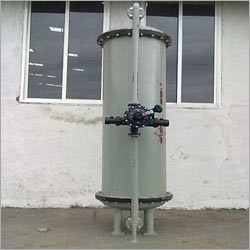
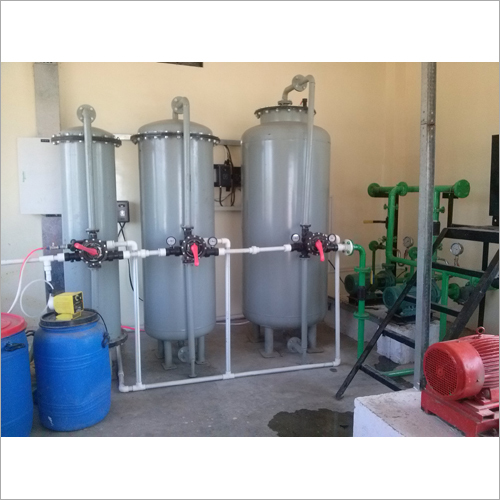
Water Softening Plants
10000 INR/Bag
Product Details:
- Ph Level 6.5-8.5
- Noise Level Low (<70 dB)
- Recycle Rate Up to 98%
- Frequency 50 Hz
- Water in conductivity Up to 2000 S/cm
- Flow Rate 500-10000 LPH
- Pump Type Centrifugal/Multi-stage
- Click to view more
X
Water Softening Plants Price And Quantity
- 10000 INR/Bag
- 1 Plant
Water Softening Plants Product Specifications
- 500-10000 Liters/hr
- <20 S/cm
- Industrial, Commercial, Residential
- Borewell Water, River Water, Municipal Supply
- Mild Steel, FRP, Stainless Steel
- Electric Motor
- Ion-Exchange Based Softening
- 220-240V, 50Hz
- 98%
- Water Softening Plant
- Corrosion Resistant, Rugged Design, Easy Installation, Reliable Operation
- Floor Mounted
- Multi Grade Sand/Activated Carbon Filter
- 1-5 kW
- Centrifugal/Multi-stage
- 500 LPH to 50,000 LPH
- 500-10000 LPH
- Semi-Automatic/Automatic
- Up to 2000 S/cm
- 50 Hz
- 6.5-8.5
- Low (<70 dB)
- Up to 98%
- Up to 99%
- Electric
- Epoxy Coated for Durability
- Automatic/Manual
- 50-300 kg
- <5 ppm as CaCO3
- Up to 1000 ppm as CaCO3
- Varies as per capacity
- UPVC/SS/MS
- 2-4 kg/cm2
- Digital / Automated
- Cation Exchange Resin
- Blue/White/Grey
- 5C to 50C
- 3-way/5-way Multiport Valve
Water Softening Plants Trade Information
- 1 Plant Per Day
- 1 Days
Product Description
In this field we have got an international repute as one of the leading manufacturers of Water Softening Plants. These plants are used to soften the hard water by removing solid impurities. Widely used in waste water systems, our plants are manufactured under the strict guidance of the expert professionals using best quality materials. We can make the Water Softening Plants available for the clients in different specifications as per their requirements.
Features:
-
Robust construction
-
Highly effective
-
High operational fluency
Advanced Water Softening Technology
Employing high-grade cation exchange resin, our systems use ion-exchange technology for reliable hard water treatment. The digital or automated control panels streamline the softening process, making it user-friendly and efficient. Automatic or manual regeneration options further enhance system flexibility, ensuring consistent soft water output with minimal intervention.
Durability and Flexibility in Design
Built with epoxy-coated vessels and high-quality UPVC/SS/MS piping, these plants withstand high working pressures (2-4 kg/cm) and varying temperatures (5C to 50C). Available in a range of capacities and floor-mounted configurations, the systems can be tailored to meet the specific water treatment needs of your application, whether for industrial process water or municipal supply.
Superior Performance and Easy Maintenance
With state-of-the-art multiport valves and salt storage up to 300 kg, the units ensure long intervals between servicing. Service valves (3-way/5-way) and robust multi-grade sand or activated carbon filters guarantee longevity and minimal maintenance. Their low power consumption and quiet operation (below 70 dB) make them highly suitable for diverse environments.
FAQs of Water Softening Plants:
Q: How does the water softening process work in these plants?
A: The process uses cation exchange resin to replace calcium and magnesium ions (which cause hardness) with sodium ions. As water passes through the resin bed, these unwanted ions are absorbed, resulting in softened water with outlet hardness less than 5 ppm as CaCO3.Q: What are the benefits of using a water softening plant with an automated control panel?
A: Automated control panels simplify operations by monitoring and managing the regeneration cycles, reducing manual intervention, improving efficiency, minimizing downtime, and ensuring consistent soft water output.Q: Where can these water softening plants be installed?
A: They are suitable for floor-mounted installation in industrial, commercial, and residential settings, including factories, hotels, hospitals, and large residential complexes, accommodating a variety of water sources such as borewell, river, and municipal water.Q: What is the typical maintenance process for these water softening systems?
A: Maintenance involves periodic resin regeneration using salt, checking the multiport service valve, and cleaning or replacing the sand/carbon filters. Automated systems alert users when maintenance or salt replenishment is required, simplifying upkeep.Q: When should the resin regeneration cycle be initiated?
A: The regeneration cycle is typically triggered automatically based on preset intervals or flow volumes, but it can also be started manually when water hardness at the outlet begins to rise or according to the control panels alert.Q: Is this water softening plant suitable for treating water with high conductivity or hardness levels?
A: Yes, the plant effectively handles inlet water with up to 1000 ppm hardness (as CaCO3) and conductivity up to 2000 S/cm, delivering consistent softened water with less than 5 ppm hardness and conductivity below 20 S/cm.Q: What are the main usage applications for these water softening units?
A: They are widely used in industries requiring soft water for boilers, cooling towers, process water, as well as commercial and residential environments to prevent scaling and enhance the lifespan of plumbing and appliances.Tell us about your requirement

Price:
Quantity
Select Unit
- 50
- 100
- 200
- 250
- 500
- 1000+
Additional detail
Mobile number
Email

Other Products in 'Softening Plant' category

Contact Details

- Shop No. - 4, Chaitanya Apartment, Opp, Van Vasant Colony Gate, Parvati, Pune - 411009, Maharashtra, India
- Phone : 08045811808
ANUJ ENTERPRISES
GST : 27AJPPP5011Q1ZK

- Mr DHANANJAY PADMAKAR DESHPANDE (PARTNER)
- Mobile : 08045811808
- Send Inquiry
 Send Inquiry
 Send Inquiry
 Send SMS
ANUJ ENTERPRISES
All Rights Reserved.(Terms of Use)
Developed and Managed by Infocom Network Private Limited.
Developed and Managed by Infocom Network Private Limited.


