Welcome to our company
 Send Email
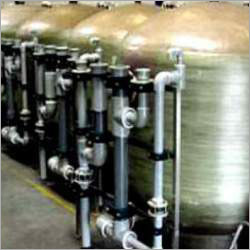
Demineralization Water Treatment Plants
10000 INR/Bag
Product Details:
- Frequency 50-60 Hz
- Ph Level 6.5-7.5 (Output Water)
- Water Out Conductivity < 10 S/cm
- Efficiency (%) > 97%
- Power Consumption 2-5 kW (depends on capacity)
- Noise Level Low
- Pump Type Centrifugal / Dosing Pump
- Click to view more
X
Demineralization Water Treatment Plants Price And Quantity
- 1 Plant
- 10000 INR/Bag
Demineralization Water Treatment Plants Product Specifications
- 6.5-7.5 (Output Water)
- 50-60 Hz
- Multi Grade / Carbon / Micron Filter
- Stainless Steel / FRP / MSRL
- Low
- Up to 99% TDS removal
- Automatic
- 2-5 kW (depends on capacity)
- > 97%
- 250 LPH to 50,000 LPH
- < 10 S/cm
- 220-240 V
- Corrosion Resistant, Long Life, Low Maintenance
- Skid Mounted
- Borewell, Tap Water, River Water
- Electric Motor
- Electric
- Centrifugal / Dosing Pump
- From 250 to 50,000 LPH
- Demineralization Water Treatment Plant
- Pharmaceuticals, Boiler Feed, Laboratories, Food Industries
- Ion Exchange
- up to 98%
- Customizable as per requirement
- < 1000 S/cm
- Drain / Recycle
- Manual / Semi Automatic / Automatic
- 2-4 kg/cm2
- Sand Filtration
- Digital / Microprocessor-based
- ISI / ISO Certified
- 5-45C
- Blue / Grey / Custom
- Up to 600 PPM
- UPVC / SS Fittings
- Cation and Anion Exchange Resin
- 10-15 Years (with regular maintenance)
- 2 to 4 (as per design)
Demineralization Water Treatment Plants Trade Information
- 1 Plant Per Day
- 1 Days
Product Description
Adhering to the industry standards and norms for qualitative production, we have successfully attained the name of reliable manufacturer Demineralization Water Treatment Plants. The plant is to remove organic substances from water and make it drinkable. At our production unit, we use best quality materials, sourced from the most reliable vendors to manufacture the plants. The quality inspectors precisely check the Demineralization Water Treatment Plants on certain quality parameters before offering at the pocket friendly prices.
Features:
-
Rugged construction
-
Smooth operation
-
Highly effective
High-Efficiency Ion Exchange Technology
These demineralization plants leverage advanced ion exchange techniques with multi-grade, carbon, and micron filtration to achieve water output conductivities below 10 S/cm. Cation and anion exchange resins remove virtually all dissolved ions, ensuring a consistent purity level above 97% efficiency and up to 99% TDS removal, suitable for critical applications.
Customizable and Robust Construction
Designed to cater to varying flow rates from 250 to 50,000 LPH, these plants are built using high-quality stainless steel, FRP, or MSRL materials. Options for UPVC or SS pipe fittings, multiple vessel configurations, and flexible installation on skid mounts or custom setups ensure adaptability and long operational life in diverse industrial environments.
Smart Controls and Low Maintenance
Equipped with digital or microprocessor-based control panels, the system offers seamless control for manual, semi-automatic, or automatic regeneration. Its corrosion-resistant design, combined with features like sand filtration pretreatment and efficient discharge handling (drain/recycle), makes maintenance straightforward and service life extendable up to 1015 years with routine care.
FAQs of Demineralization Water Treatment Plants:
Q: How does a demineralization water treatment plant operate?
A: These plants use ion exchange technology, where water passes through cation and anion exchange resin vessels. Dissolved salts and minerals are exchanged and removed, resulting in pure water with conductivity below 10 S/cm. The process often begins with sand filtration as pretreatment, ensuring longer resin life and system efficiency.Q: What are the typical applications for these demineralization plants?
A: These systems are widely used in industries demanding high-purity water, such as pharmaceuticals, laboratories, boiler feed systems, and food processing. They also suit facilities sourcing water from borewells, rivers, or municipal supplies with hardness up to 600 PPM.Q: When should the resin regeneration process be carried out?
A: Resin regeneration is necessary when ion exchange resins become saturated with ions. The frequency depends on inlet water quality, system usage, and design configuration. The process can be performed manually, semi-automatically, or automatically, as per operator preference and specific plant setup.Q: Where can these demineralization plants be installed?
A: These skid-mounted or custom installation systems can be set up in various locations, including industrial plants, laboratories, or production facilities, thanks to the adaptable volume, flow rate, and ambient temperature operation range (545C).Q: What are the main benefits of using these plants?
A: Key advantages include high purity output water, customizable capacity, low power consumption (25 kW), corrosion resistance, low maintenance demands, and long service life (1015 years). They also feature high recycle rates (up to 98%) and digitalized control for reliable operation.Q: How is treated water quality maintained over long periods?
A: Regular maintenancesuch as timely resin regeneration, monitoring of control panels, and scheduled service of pumps and filtersensures consistently high water purity and system performance throughout the plants 1015 year lifespan.Q: What process ensures the plant meets international standards?
A: Each demineralization system is designed in line with ISI/ISO certifications. Quality checks and advanced manufacturing practices ensure that all materials and operational features comply with recognized global standards for water treatment efficiency and safety.Tell us about your requirement

Price:
Quantity
Select Unit
- 50
- 100
- 200
- 250
- 500
- 1000+
Additional detail
Mobile number
Email

Other Products in 'Water Treatment Plants' category



Contact Details

- Shop No. - 4, Chaitanya Apartment, Opp, Van Vasant Colony Gate, Parvati, Pune - 411009, Maharashtra, India
- Phone : 08045811808
ANUJ ENTERPRISES
GST : 27AJPPP5011Q1ZK

- Mr DHANANJAY PADMAKAR DESHPANDE (PARTNER)
- Mobile : 08045811808
- Send Inquiry
 Send Inquiry
 Send Inquiry
 Send SMS
 Call Me Free
ANUJ ENTERPRISES
All Rights Reserved.(Terms of Use)
Developed and Managed by Infocom Network Private Limited.
Developed and Managed by Infocom Network Private Limited.


